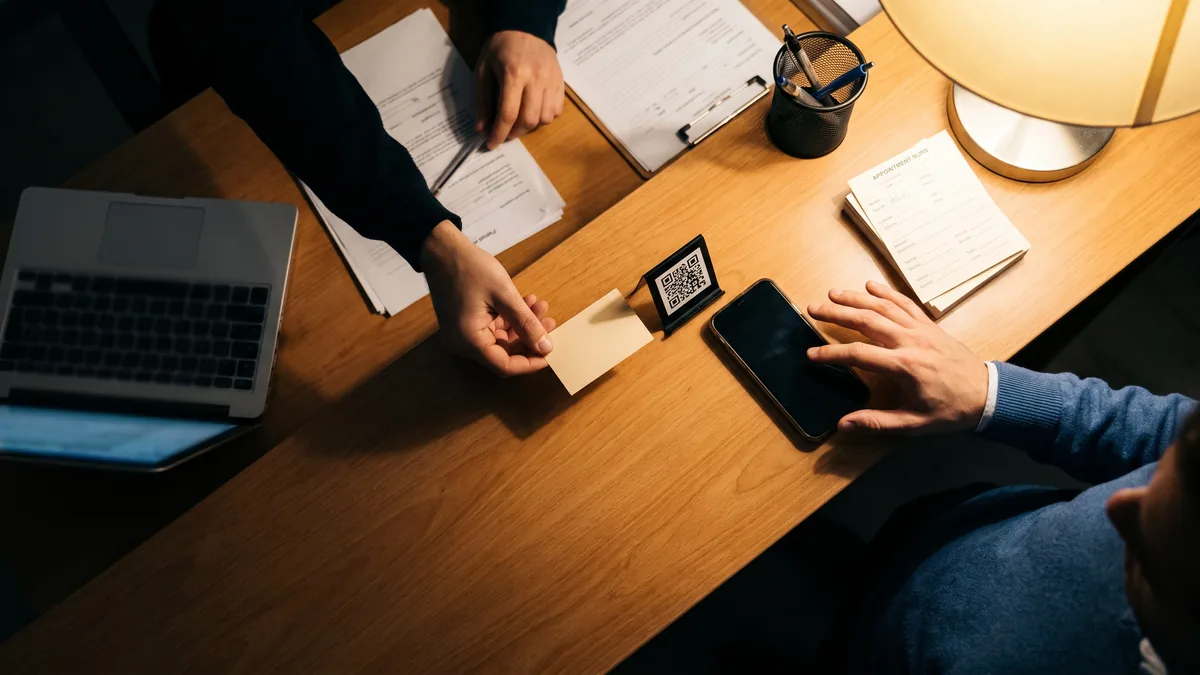
24-hour online booking and front desk changes
The front desk must adapt when a patient self-books: schedule, confirmations, payments, data and rules to prevent lost slots and duplicate bookings.

Key Takeaways
- 24-hour online booking does not eliminate work: it shifts the front desk’s workload from “answering calls” to “monitoring the schedule and ensuring data quality”.
- Without clear schedule rules (duration, resources, reasons), the public appointments page creates impractical slots and misallocated appointments.
- Decide which data are mandatory at booking and who validates them; otherwise the patient record is born incomplete and manual work multiplies.
- Confirmation and payment timing change: define what is paid at booking, what is paid in-clinic and what happens in case of no-show.
- Measure with data you already have (reasons, cancellations, duplicates) to tune available slots and prevent the schedule from “self-disordering”.
24-hour online booking changes the tasks at the front desk and how the schedule is governed. If the patient picks a slot and confirms without speaking to anyone, you need rules, checks and well-written messages. This article sets out what shifts and how to organise it.
What really changes at the front desk when the patient books alone
Fewer calls, more schedule oversight
When you enable a booking widget on the website, the phone does not disappear: the reason for calls changes. Instead of “I want an appointment”, you get more “I want to change it”, “I made a mistake” or “I didn’t get the message”.
Action you can take this week: for five days, have the front desk note the reason for each call in three categories:
- Book a new appointment.
- Change/cancel an appointment.
- Queries (price, address, documentation, duration, clinician).
With that distribution you can decide whether to adjust messages on the public appointments page, increase buffers between appointments, or schedule a short daily “schedule check” period.
Work moves to “validation” and “cleanup”
Data entry is not always done by the front desk any more. It’s done by the patient… with normal mistakes: incomplete name, two family names in one field, wrong phone number, bouncing email or an incorrectly chosen reason for appointment.
This creates new tasks:
- Detect duplicates (the same patient creates two patient records).
- Complete minimum fields for billing and communication.
- Reassign appointments if the chosen reason requires more time or a different resource.
Action you can take: define a “minimum viable patient record” and write it as a checklist for the front desk:
- Given name and family name separated.
- Mobile phone number.
- Email (if you use it for confirmations).
- Consents / data protection information (GDPR) according to your process.
- Appointment reason selected from a list (not free text, if possible).
The front desk becomes “exception manager”
With online booking, routine runs itself; the difficult cases concentrate. Real examples:
- Patient books two consecutive appointments “just in case”.
- Patient books with the wrong clinician because “they didn’t know”.
- Patient books a short slot for a service that needs more time.
- Available slots that look fine, but leave a “dead fragment” nobody can use.
Action you can take: create a fixed daily block (15–30 minutes) to review exceptions:
- New appointments from the last 24 hours.
- Appointments missing phone or email.
- Appointments with a “generic” reason (if you have one) for re-labelling.
- Appointments adjacent to a break or to closing time that could break workflow.
Design the schedule so online booking doesn’t break it
Define duration rules by reason, not “by eye”
Online booking forces what used to be a conversation (“what are you coming for?”) into schedule rules. Otherwise the patient fits into whatever slot is free, not what works best.
Operational best practice:
- Closed list of appointment reasons (services) with assigned durations.
- Realistic time blocks for first visits vs reviews.
- Separate “consultation” from “administration” (for example, “collect report” if that applies to your operation).
Action you can take: review last week’s schedule and mark:
- Appointments that overran due to insufficient duration.
- Appointments that were too short.
- Appointments that had to be moved because the reason was wrong.
Use that to adjust your table of reasons and durations.
Control resources: clinician, room and equipment
In many clinics it’s not just the clinician that matters: the room or a piece of equipment may be required. If you let patients book online without that logic, conflicts will appear on the same day.
Things you need to be clear about:
- Whether an appointment requires a specific room (e.g., for specific equipment).
- Whether two clinicians share a resource.
- Whether there are prep/cleaning times between appointments (according to your internal operation).
Action you can take: ask your schedule system provider (or check internally):
- “Can I link each appointment type to a resource (room/equipment) and block it automatically?”
- “What happens if two patients try to book the same resource at once?”
If you cannot block resources, limit online booking to the simplest services and leave the rest to the front desk.
Decide which slots are shown and which aren’t
“Available slots” is not the same as “useful slots”. If you show every empty slot, the patient will pick the one that suits them but may suit you least.
Practical filtering criteria:
- Don’t show slots that leave an unusable remainder before a break.
- Don’t show the last slot of the day if it typically causes delays.
- Don’t open the schedule beyond where you can guarantee clinicians (if shifts vary).
Action you can take on Monday: review the grid and mark with colours:
- Slots you do want to fill.
- Slots you prefer to reserve for internal urgencies or rebookings. Then configure (or ask to configure) the public appointments page to show only the slots you actually want to sell.

Confirmations, cancellations and no-shows: new rules
Move the confirmation moment
When an appointment arrives via online booking, confirmation can be automatic, but that does not mean it is sufficient. The front desk’s objective shifts: not “confirm everything”, but to detect fragile appointments.
Signs of a fragile appointment:
- First visit without complete data.
- Booking with short notice and no reliable contact channel.
- Ambiguous reason or “other”.
Action you can take: create an exception-based confirmation protocol:
- The front desk calls or messages only fragile appointments.
- The rest are handled with automatic messages (if your system allows) or a standard reminder.
Cancellation policy: written and visible
Online booking turns a cancellation policy into something more than a phrase said on the phone. It must be written and visible before confirming.
Include at minimum:
- How far in advance changes/cancellations can be made without charge (if applicable).
- How to cancel (link, phone, email) and your opening hours.
- What happens in case of no-show (rescheduling, upfront payment, etc., according to your policy).
Action you can take: review the text the patient sees before finalising booking. If it’s unclear, rewrite it in 4–6 lines and run it by the front desk for validation (“would you tell a caller the same?”).
Payment: decide what is paid and when
There is no single correct answer. What matters is that the front desk does not have to improvise each time. Define rules by service:
- Services that require preparation: consider an upfront payment.
- High-demand services: consider payment at booking.
- First-visit services: decide whether to collect payment in-clinic or beforehand.
Action you can take: write an internal table (not for patients, for the team):
- Service / Reason.
- Paid at booking? Yes/No.
- Payment channel used.
- What the front desk does if payment fails.
If you use software such as ClinicaDigital Software, ask exactly how payment status is recorded on the appointment and who can see it at the front desk.
Data and GDPR: what changes when the patient types their data
Minimise data at booking and complete later
Asking for too much data at online booking increases abandonment and errors. Ask just what is necessary to:
- Identify the patient.
- Contact them about changes.
- Fit the appointment correctly.
The rest can be completed in-clinic or via a follow-up link.
Action you can take: review your booking form and remove fields you don’t use day-to-day. If a piece of data is not used for scheduling, payment or communication, it usually isn’t needed at the first step.
Provide clear information and record consent where required
La gestión de datos personales debe cumplir RGPD y LOPDGDD (BOE) (GDPR and LOPDGDD; the BOE is Spain’s official gazette). A simple text is not enough: the process must be consistent with your operation (who accesses data, for what, how long you keep it, etc.).
Points to review with your legal advisor or data protection officer if you have one:
- Informative data protection text on the public appointments page.
- Communication channels (SMS/email) and legal basis.
- Staff access: front desk, clinicians, administration.
La AEPD (the AEPD (Spain’s data protection authority)) publishes guides and criteria useful for grounding obligations in real processes.
Action you can take: ask your provider or internal data controller for a screenshot or description of:
- What is recorded when someone books (date, IP if applicable, acceptance of texts).
- How it’s demonstrated that the patient saw the information. If you cannot prove it, your process is weak even if it appears compliant.
How to avoid common errors in 24-hour online booking
Duplicate patients: implement a minimal “match”
Duplicates typically arise for two reasons: the patient already existed (past appointment) or books with a different email/phone. The front desk then spends time “merging” records.
Action you can take: define an internal identification rule:
- If mobile phone matches, treat as the same patient.
- If email matches, check before creating a new patient record. Assign one person (front desk or administration) the weekly task of reviewing duplicates.
Wrongly chosen reason: reduce options and add examples
If you offer 25 choices, the patient will pick the wrong one. If you offer three generic options, you won’t fit the schedule well. Find a middle ground and help with microcopy.
Example wording for a reason:
- “First visit (new patient): to meet and plan the service”.
- “Review: if you have been seen in recent months”.
- “Session: if you already have a plan in progress”.
Action you can take: review your reason names and remove internal jargon. Run them past the front desk: if the front desk wouldn’t say it on the phone, the patient won’t understand it.
Changes and cancellations: provide a simple path
If a patient books at night, they will also try to cancel out of hours. If there isn’t a clear button or link, they’ll leave it for later… increasing the risk of a no-show.
Action you can take: always include in the confirmation message:
- How to change/cancel (one primary method).
- What happens if they cancel late (if applicable).
- Front desk phone number and opening hours (as an alternative).
How to implement this in your clinic
Monday, 20 minutes (management + front desk): define which services are available via online booking and which remain front-desk-only.
Check: written list of “bookable online” vs “phone only”.Monday, 30 minutes (front desk): review last week’s schedule and mark incidents: rebookings, long appointments, dead slots, duplicates.
Check: a list of 10–15 concrete cases with cause (“wrong reason chosen”, “insufficient duration”, “missing data”).Tuesday, 45 minutes (schedule manager): adjust reasons and durations, and decide which available slots are shown on the public appointments page.
Check: table of reasons with duration and visibility rules shared with the team.Wednesday, 30 minutes (front desk + administration): define the “minimum viable patient record” and the daily validation protocol (what is reviewed and when).
Check: printed checklist or internal document, with assigned responsibility.Thursday, 30 minutes (management):** draft the changes/cancellation policy and review the legal text with your advisor (GDPR/LOPDGDD in the BOE, AEPD criteria ).
Check: final text approved and placed in the booking flow.Friday, 15 minutes (front desk): create a fixed daily block for “online booking exceptions” (fragile appointments, missing data, doubtful reasons).
Check: a reserved slot appears in the schedule and is actually used.End of week (management): review three simple indicators with data you already have:
- number of appointments rebooked by reason/duration,
- number of duplicates detected,
- number of late cancellations (according to your rules).
Check: concrete decisions for the following week (rename reasons, close certain slots, require a mandatory field).
Frequently Asked Questions
Does online booking reduce work or just move it?
It moves the work. Phone time decreases, but schedule oversight, data validation and change management increase. If you don’t allocate that time, the schedule becomes disorderly and the front desk ends up firefighting.
What minimum data should I request when booking an appointment?
Ask what is necessary to identify and contact: given name and family name, mobile phone and a confirmation channel (email if you use it). Add the appointment reason from a list to fit duration and clinician. Complete the rest in-clinic or afterwards.
How do I avoid dead fragments if the patient chooses the time?
Decide which available slots are shown and which are kept for rebookings or internal urgencies. Adjust durations by reason so blocks fit. Review each Monday the “remainders” left by the week and correct rules, not individual cases.
What should the front desk do each day with online appointments?
Review new appointments, detect incomplete patient records, check doubtful reasons and contact only fragile appointments. Log changes and cancellations consistently to keep traceability. Maintaining a fixed daily block for these exceptions prevents constant interruptions.
External Links
- El paciente geriátrico en urgencias
- Tratamiento del dolor en el paciente oncológico Treatment of …
- Tratamiento del dolor en el paciente oncológico
- El paciente geriátrico en urgencias The geriatric patient and …
- Manejo del paciente diabético hospitalizado
- La gestión de datos personales debe cumplir RGPD y LOPDGDD (BOE)
- La AEPD
- Jueves, 30 minutos (gerencia):** redacta política de cambios/cancelaciones y revisa el texto legal con tu asesoría (RGPD/LOPDGDD en BOE